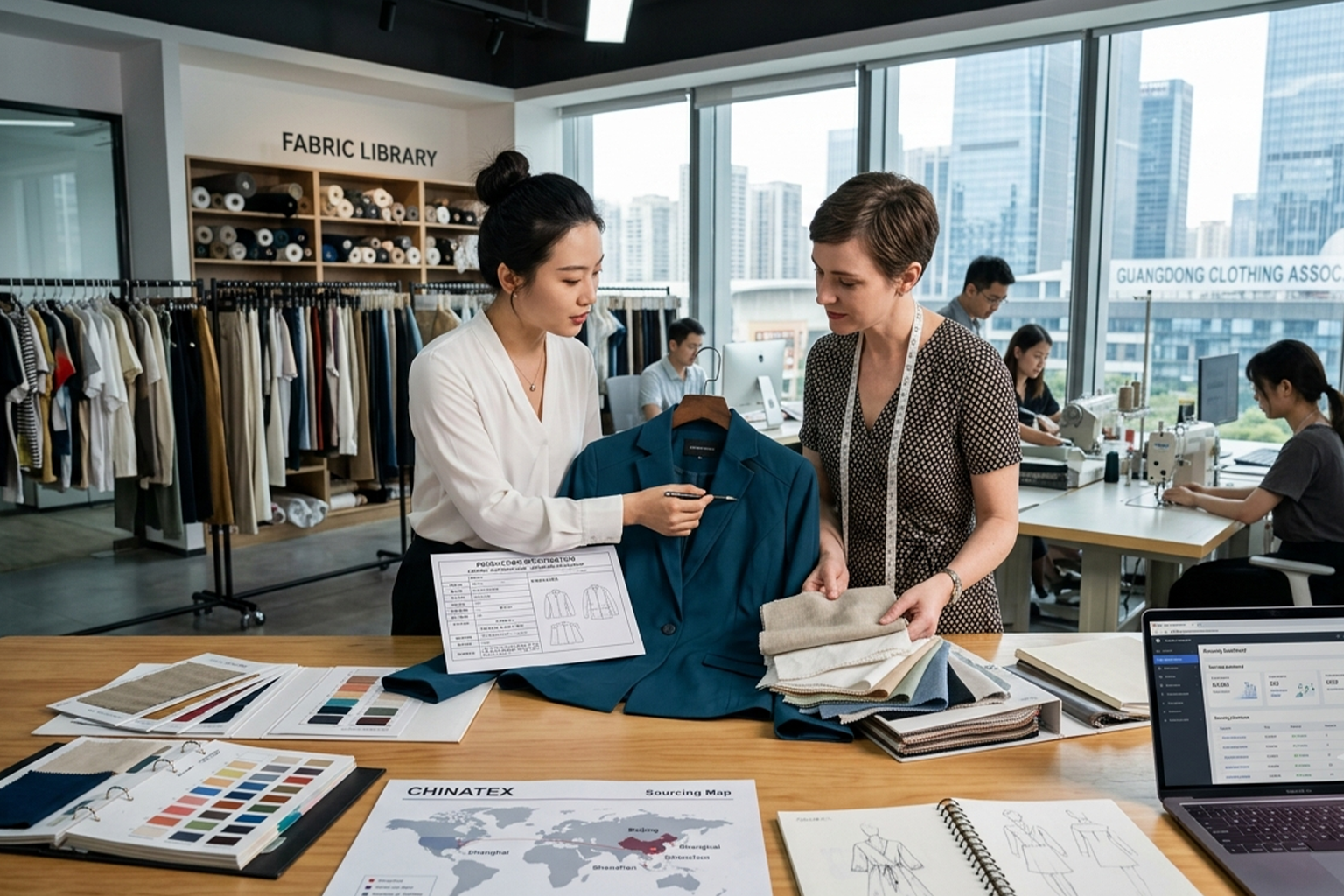
Mastering the China Apparel Sourcing Process: A Strategic Guide for Modern Fashion Brands
Sourcing apparel from China remains a cornerstone strategy for global fashion brands aiming to balance cost, scalability, and speed-to-market. However, navigating the complex ecosystem of Chinese garment manufacturing requires more than just browsing wholesale platforms. From understanding localized industrial clusters to mastering international logistics, shifting from a novice buyer to an established importer demands deep supply chain literacy. This comprehensive guide breaks down the actionable steps, hidden risks, and optimization strategies required to successfully source apparel from China and streamline your global supply chain.
1. Map the Geography of Chinese Apparel Clusters
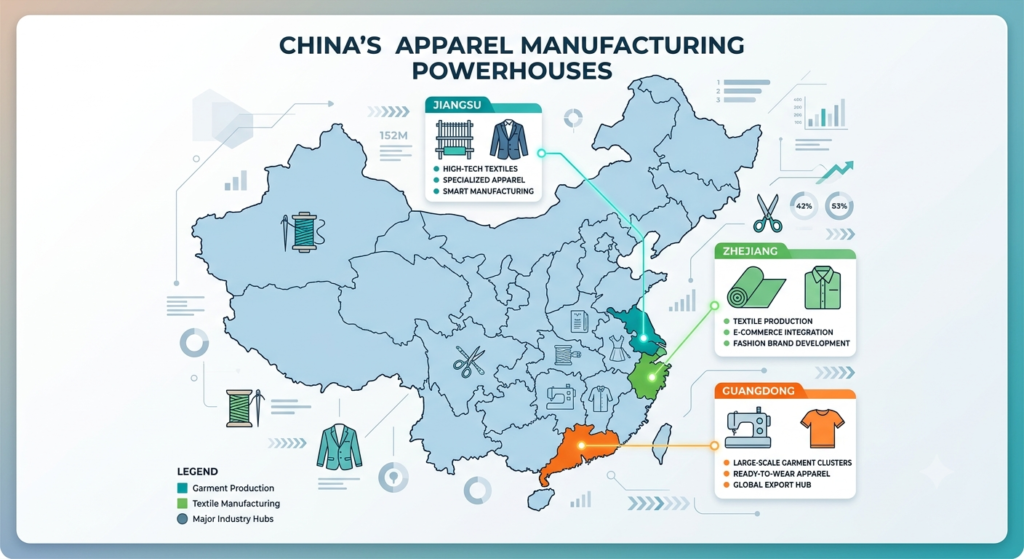
In our sourcing experience, buying efficiency heavily depends on targeting the correct geographical hub. China’s apparel manufacturing is not monolithic; instead, it operates via highly specialized industrial clusters.
Key Manufacturing Hubs for Garment Production
- Guangdong Province (Guangzhou & Shenzhen): The global epicenter for fast fashion, trendy womenswear, and high-end streetwear. Guangzhou boasts massive fabric markets like the Zhongda Fabric Market, making fabric sourcing incredibly agile.
- Zhejiang Province (Ningbo & Yiwu): Ningbo is world-renowned for high-quality knitwear, suits, and heavy-duty outerwear. Yiwu, while famous for its small commodities, serves as a primary hub for seamless underwear, socks, and low-cost accessories.
- Jiangsu Province (Changshu & Suzhou): The go-to region for down jackets, winter outerwear, and wedding textiles.
By aligning your specific product category with the corresponding regional expertise, you drastically reduce sample development times and lower initial defect rates.
2. Evaluate Potential Apparel Suppliers: Factories vs. Trading Companies
When sourcing apparel from China, you will encounter two main types of suppliers: Direct Manufacturers (Factories) and Trading Companies. Choosing the wrong partner can lead to inflated costs or unmanageable Minimum Order Quantities (MOQs).
| Supplier Attribute | Direct Apparel Factory | Trading Company |
|---|---|---|
| Pricing Structure | Low (Factory-direct cost) | Medium to High (Commission included) |
| Minimum Order Quantity (MOQ) | High (Typically 500–1,000 units/style) | Low (Often 50–200 units/style) |
| Product Customization (OEM) | Full customization capabilities | Limited to catalog modifications |
| Product Variety | Narrow focus (e.g., only t-shirts) | Broad (Can source clothing, bags, shoes) |
| Communication Quality | Technical, sometimes slower | Fluent English, highly responsive |
Decoding Supplier Legality and Compliance
To protect your business, always verify your supplier’s business license (Business License / 营业执照). Look closely at their “Scope of Business” (经营范围). If it explicitly mentions “Manufacturing” or “Production” (制造/生产), you are dealing with a direct factory. If it only states “Wholesale” or “Trading” (批发/贸易), they are a middleman.
3. Tech Packs, Prototyping, and Quality Control Workflows
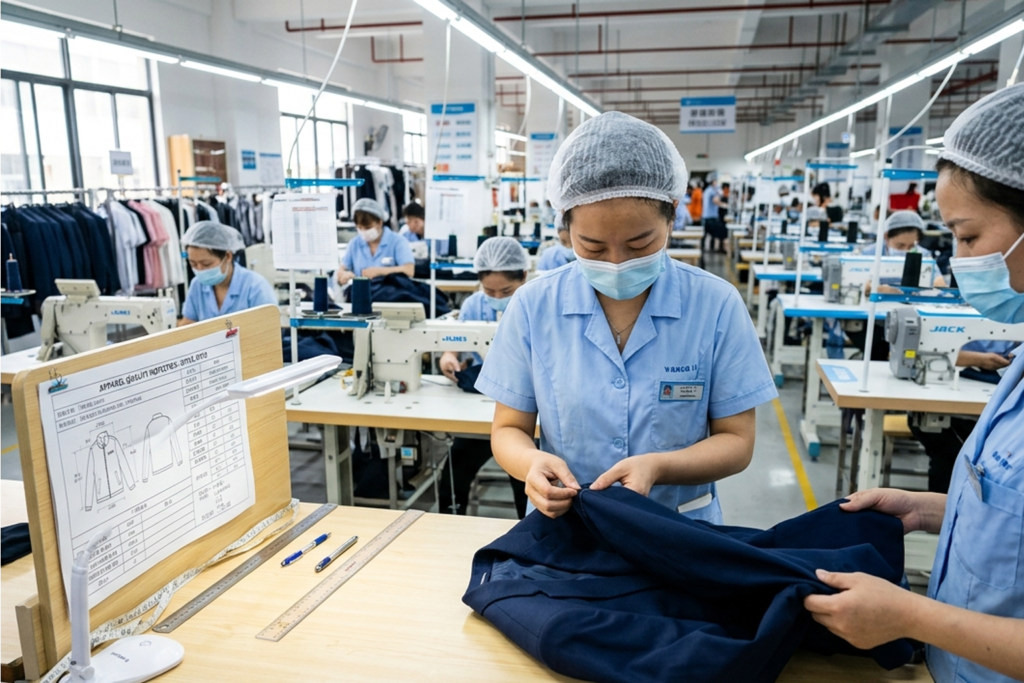
A flawless final product depends entirely on your initial technical communication. Never send a simple product photo and expect a perfect garment.
Step-by-Step Apparel Prototyping Blueprint
- Develop a Detailed Tech Pack: Your tech pack must include precise measurement charts, grading sheets, fabric weight specifications (GSM), Pantone color codes, and stitch types.
- Request a Fit Sample: The factory will create a preliminary sample using available factory- Nottingham fabrics to test the pattern and silhouette.
- Approve the Pre-Production (PP) Sample: This is the absolute golden sample. It must use the exact final fabric, trims, labels, and packaging. Production should never start until the PP sample is signed off.
Sourcing Insight: During our time managing supply chains in Yiwu and Shenzhen, we observed that over 70% of production errors stem from misunderstood tech packs. Therefore, implementing a mandatory third-party quality inspection during mid-production (when 20-50% of the garments are finished) is vital to keep the defect rate below a strict 1.5% threshold.
4. International Payment Terms and Risk Mitigation
Managing financial transactions with overseas manufacturers requires balanced payment terms to safeguard your working capital.
Preferred Payment Methods for Apparel Sourcing
- Telegraphic Transfer (T/T): The industry standard. The standard format is a 30% deposit to initiate production, and the remaining 70% balance paid after quality inspection approval but before shipment.
- Letter of Credit (L/C): Highly recommended for large-scale orders exceeding $50,000. It provides an ironclad bank guarantee that funds will only be released when the factory presents compliant shipping documents.
Never agree to a 100% upfront payment via T/T, Western Union, or untraceable accounts. Ensure all invoices are issued to the supplier’s official corporate bank account, matching their registered business name exactly.
5. Shipping and Customs Logistics: From Chinese Ports to Global Warehouses
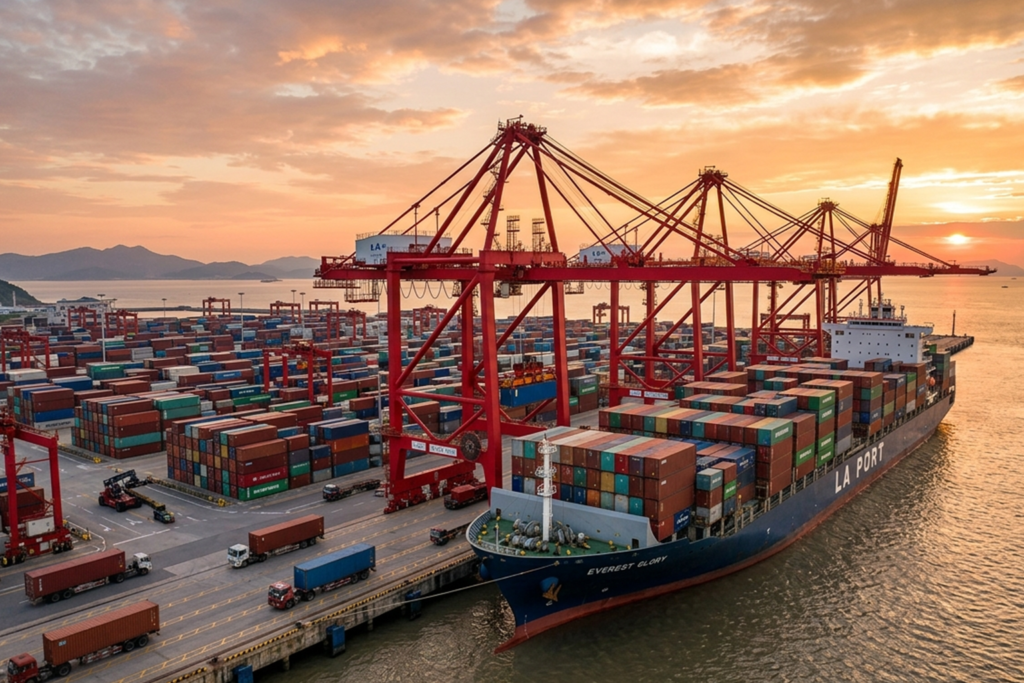
Moving your finished apparel from China to your domestic fulfillment center
[Factory Production] -> [Inland Logistics to Port] -> [Customs Clearance (China)] -> [Ocean/Air Freight] -> [Customs Clearance (Destination)] -> [Final Delivery]
Navigating Freight Options
For time-sensitive fashion drops, air freight provides rapid delivery within 3–7 days. However, for bulk apparel sourcing shipments, ocean freight remains the most cost-effective method. Most garments shipped from East China exit via Ningbo Port or Shanghai Port. If your cargo is destined for the United States, it will typically cross the Pacific and arrive at the LA Port (Port of Los Angeles) before undergoing final inland distribution.
Essential Shipping Documentation
To prevent costly delays during Custom Clearance, your freight forwarder must accurately prepare the Bill of Lading (B/L), Commercial Invoice, Packing List, and a Certificate of Origin. Ensure your apparel is correctly classified under the proper Harmonized System (HS) code to avoid miscalculated customs duties or unexpected regulatory audits.
6. Frequently Asked Questions (FAQ)
What is the typical MOQ when sourcing apparel from China?
The typical Minimum Order Quantity (MOQ) ranges from 500 to 1,000 pieces per style/color for direct factories. However, small-scale trading companies or specialized flexible supply chain manufacturers in garment hubs like Guangzhou may accept lower MOQs of 100 to 200 pieces.
How do I protect my fashion designs from being copied in China?
To effectively protect your intellectual property, sign a China-centric NNN Agreement (Non-disclosure, Non-use, Non-circumvention) before sharing your proprietary tech packs. Additionally, registering your trademarks directly in China prevents malicious third-party filings.
How do I calculate the landed cost of imported clothing?
To find the true landed cost of your apparel sourcing pipeline, add the factory’s Ex-Works (EXW) or Free on Board (FOB) price, domestic inland trucking fees, ocean/air freight charges, cargo insurance, destination customs brokerage fees, and country-specific import tariffs.
Elevate Your Global Supply Chain Strategy
Mastering the intricacies of the China apparel sourcing workflow is an ongoing process of refining supplier partnerships, monitoring manufacturing quality, and optimizing international freight lanes. By implementing strict quality checkpoints, verifying supplier licenses, and strategically choosing shipping routes, your fashion brand can capture excellent profit margins while delivering top-tier garment quality to your end consumers.
Are you looking to optimize your production efficiency, reduce logistics costs, or connect with verified garment manufacturers in China’s premier textile hubs? Contact Us Today to speak with our sourcing experts, or read comprehensive guide on Understanding International Incoterms to solidify your global logistics framework.
Leave a Reply