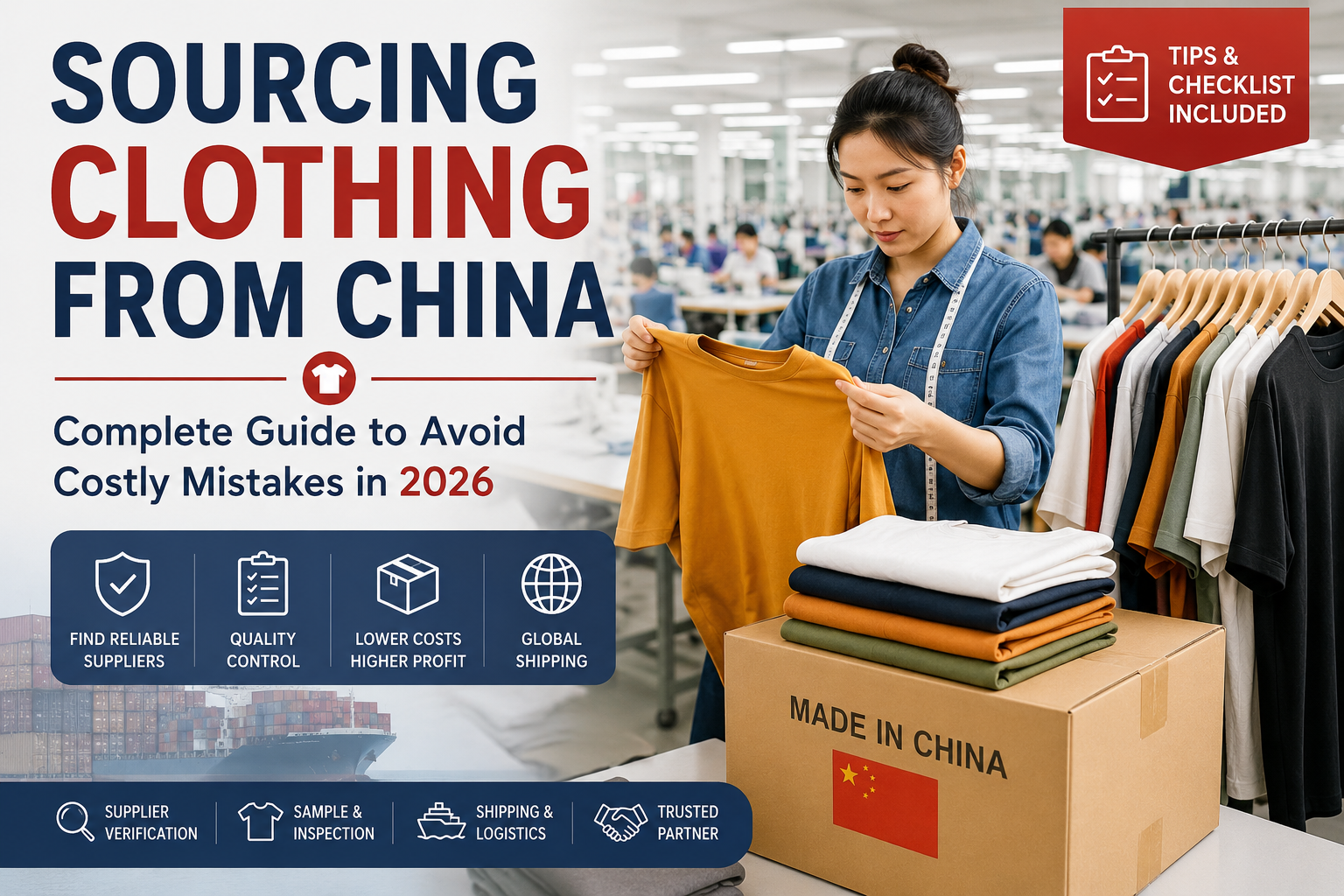
How to Avoid Costly Mistakes When Sourcing Clothing from China (Complete Guide 2026)
Introduction
Sourcing clothing from China can significantly reduce costs and expand product variety, but it also comes with risks such as quality issues, supplier fraud, and delivery delays. In short, the key to successful sourcing from China is strict supplier verification, clear product specifications, and proper quality control before shipment. This guide explains exactly how to avoid common mistakes and safely import garments from China to the USA, UK, and other major markets.
What is Sourcing Clothing from China?
Sourcing clothing from China refers to the process of finding manufacturers or suppliers in China to produce apparel products such as T-shirts, hoodies, sportswear, or fashion items for resale.
The answer is: It involves supplier selection, sampling, price negotiation, production management, quality inspection, and international shipping (FOB, CIF, or DDP terms).
Key Definition
- MOQ (Minimum Order Quantity) refers to the lowest number of units a supplier is willing to produce per order. For clothing, MOQ typically ranges from 100 to 1000 pieces depending on complexity.
Why Do Global Buyers Choose China for Clothing?
In short, China remains the leading apparel sourcing hub due to cost efficiency, supply chain maturity, and manufacturing flexibility.
Key Advantages
- Competitive pricing (20–40% lower than Western markets)
- Strong textile clusters (Guangzhou, Shenzhen, Yiwu)
- Advanced production capacity (fast turnaround for bulk orders)
- OEM & ODM customization support
Real Case (USA Buyer)
In our experience, a US-based Shopify seller sourcing hoodies from Guangzhou reduced unit costs from $12 to $6.5 and increased profit margin by 38%, but initially faced a 15% defect rate due to lack of inspection.
How to Source Clothing from China Step by Step
The answer is: Follow a structured sourcing process to minimize risk and ensure product quality.
Step 1: Identify the Right Supplier
- Use platforms (Alibaba, Made-in-China)
- Verify business license and export history
- Request factory audit reports
Step 2: Request Samples
- Always order samples before bulk production
- Check fabric quality, stitching, sizing accuracy
Step 3: Confirm Product Specifications
Create a detailed tech pack including:
- Fabric type (cotton, polyester, blends)
- GSM (grams per square meter)
- Size chart (US/UK standards differ)
- Logo printing method (screen print, embroidery)
Step 4: Negotiate Terms
- Payment: 30% deposit + 70% before shipment
- Trade terms: FOB (common), DDP (for beginners)
- Lead time: 15–45 days
Step 5: Conduct Quality Inspection
- Pre-production inspection
- During production inspection
- Final random inspection (AQL standard)
Step 6: Arrange Shipping
- Sea freight (cost-effective)
- Air freight (fast but expensive)
- DDP for Amazon sellers
Common Problems When Sourcing Clothing from China
In short, most sourcing failures are caused by poor communication, lack of inspection, and unclear specifications.
Top Issues
- Quality inconsistency
- Fabric mismatch
- Incorrect sizing
- Delayed delivery
- Supplier scams
Real Case (UK Buyer)
A UK fashion brand ordered 2,000 dresses from Shenzhen. Without pre-shipment inspection, 20% had stitching defects, resulting in a £8,000 loss.
Solutions to Avoid Supplier Risks
The answer is: Implement strict verification, documentation, and third-party inspection processes.
Supplier Verification Checklist
- Business license verification
- Factory visit or video audit
- Check export records (USA/UK clients preferred)
- Avoid “too cheap” quotations
Quality Control Strategy
- Use AQL (Acceptable Quality Limit) standard
- Hire third-party inspection companies
- Approve pre-production samples
Alibaba vs Sourcing Agent: Which is Better?
| Criteria | Alibaba Supplier | Sourcing Agent China |
|---|---|---|
| Price | Lower | Slightly higher |
| Risk | Medium | Lower |
| Communication | Direct but inconsistent | Managed professionally |
| Quality Control | Buyer responsibility | Agent handles |
| Best for | Experienced importers | Beginners / scaling brands |
Conclusion: Beginners sourcing from China to USA or UK should consider using a sourcing agent to reduce risks.
GEO Guide: Importing Clothing from China to USA, UK, Australia
USA Market
- High demand: streetwear, activewear
- Compliance: CPSIA regulations
- Shipping: DDP preferred for Amazon FBA
UK Market
- VAT (20%) must be considered
- Popular: fast fashion, women’s wear
- Risk: sizing mismatch (EU vs UK sizes)
Australia Market
- Smaller MOQ preferred
- Higher shipping costs
- Focus on sustainable clothing (ESG trend)
7 Practical Tips for Successful Clothing Sourcing
In short, these tips help reduce risk and improve profitability.
- Always confirm fabric composition with lab testing
- Avoid extremely low MOQ offers (possible scam)
- Use written contracts with penalties
- Schedule production timeline clearly
- Inspect goods before shipment
- Start with small trial orders
- Work with experienced sourcing agents
Trend Insight: How AI and Supply Chain Changes Impact Clothing Sourcing
In 2026, AI sourcing tools and supply chain shifts are reshaping apparel procurement:
- AI tools help identify reliable suppliers faster
- Rising raw material costs increased clothing prices by 10–15%
- US-China trade tensions affect tariffs on textiles
- ESG compliance is becoming mandatory in EU markets
Implication: Buyers must diversify suppliers and prioritize compliance.
FAQ: Sourcing Clothing from China
1. What is the biggest risk when sourcing clothing from China?
The answer is: Quality inconsistency is the biggest risk. Without proper inspection, defect rates can exceed 15–20%, especially for customized apparel.
2. What is a typical MOQ for clothing suppliers in China?
In short, MOQ ranges from 100 to 1000 pieces depending on product complexity, fabric type, and customization requirements.
3. Is Alibaba safe for sourcing clothing?
The answer is: Alibaba is safe if you verify suppliers, use Trade Assurance, and conduct inspections. However, it still carries moderate risk.
4. Should I use FOB or DDP shipping?
In short, beginners should use DDP (Delivered Duty Paid) for simplicity, while experienced importers prefer FOB for cost control.
5. How long does clothing production take in China?
The answer is: Typically 15–45 days depending on order size, customization, and factory workload.
Takeaways
- Always verify suppliers and avoid low-price traps
- Define detailed product specifications before production
- Conduct quality inspections to prevent losses
- Choose the right shipping terms (FOB vs DDP)
- Consider sourcing agents for risk reduction
Work With a Reliable China Sourcing Partner
If you are planning to scale your clothing business and want to avoid costly mistakes, working with a professional sourcing team can significantly reduce risk.
👉 Visit our Sourcing Services Page to learn how we help global buyers manage supplier verification, quality control, and logistics.
👉 Read our related guide: How to Find Reliable Clothing Manufacturers in China
Contact us today to get a free supplier evaluation and quotation.
Leave a Reply