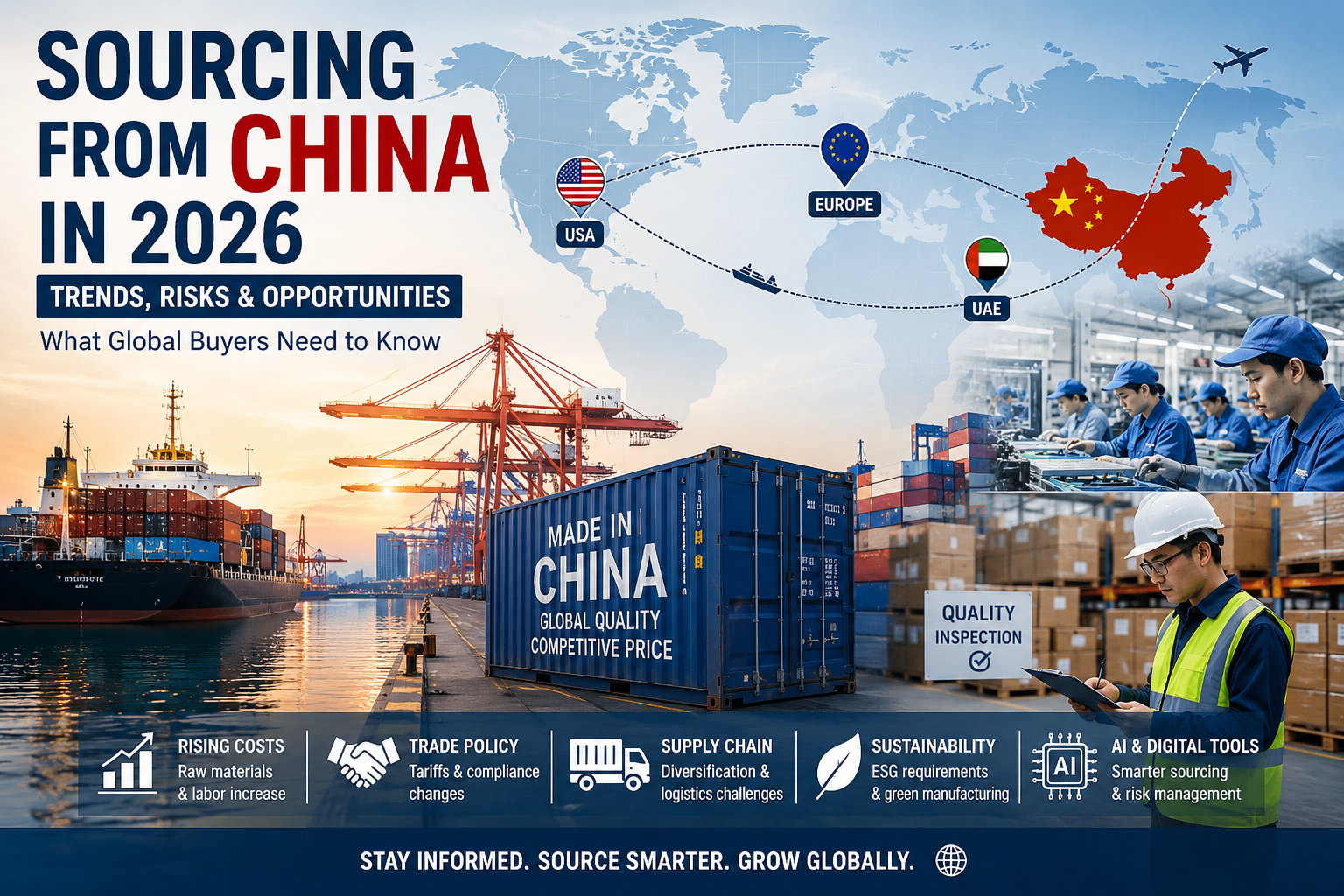
Sourcing from China in 2026: Latest Global Trade Trends, Risks, and Opportunities for USA, EU, and UAE Buyers
Introduction
In short, sourcing from China in 2026 is becoming more complex but still highly competitive due to supply chain shifts, rising costs, and geopolitical changes. Buyers from the USA, EU, and UAE must adapt to new pricing structures, logistics disruptions, and compliance rules while leveraging AI tools and diversified sourcing strategies to stay competitive.
What Are the Latest Global Trade Trends in Sourcing from China?
The answer is: Global sourcing from China is shifting from low-cost manufacturing to strategic supply chain management.
In 2025–2026, several macro trends are reshaping procurement:
- Rising labor and raw material costs (steel +12%, plastics +8%)
- Increased US-China trade tariffs
- Supply chain diversification
- Growth of cross-border eCommerce (Amazon, temu, tiktok, Shopify sellers)
- Adoption of AI sourcing tools
Definition:
China sourcing refers to the process of procuring goods from Chinese manufacturers or suppliers, typically through direct factories, trading companies, or sourcing agents.
Why Is Sourcing from China Still Relevant in 2026?
Despite challenges, China remains dominant due to its infrastructure and scale.
Key Advantages
- Mature manufacturing clusters (Shenzhen for electronics, Yiwu for small commodities)
- Efficient ports like Ningbo Port and Shenzhen Port
- Strong supplier ecosystem
- Competitive pricing vs. Vietnam/India in many categories
Real Case
In our experience, a USA Amazon seller sourcing kitchen appliances from Ningbo reduced costs by 18% compared to local sourcing, even after tariffs, by switching to FOB + bulk shipping strategy.
How Are Recent Trade Events Affecting China Sourcing?
1. US-China Trade Policy Changes
- Tariffs still apply on many categories (electronics, machinery)
- Buyers shifting to DDP shipping to simplify customs
2. EU Green Compliance (ESG Pressure)
- Germany and EU buyers require:
- CE certification
- Carbon footprint documentation
- Sustainable materials
3. Middle East (UAE) Import Growth
- Increased demand for:
- Construction materials
- Furniture
- Electronics
- Preference for CIF or DDP shipping to Dubai
How to Adapt Your Sourcing Strategy in 2026 (Step-by-Step)
Step 1: Choose the Right Supplier Type
| Option | Pros | Cons | Best For |
|---|---|---|---|
| Alibaba Supplier | Easy access | Risk of scams | Small buyers |
| Direct Factory | Lower price | Higher MOQ | Large orders |
| Sourcing Agent | Quality control | Service fee | Scaling brands |
👉 Learn more: How to avoid supplier scams when sourcing from China (internal link)
Step 2: Understand MOQ and Cost Structure
MOQ (Minimum Order Quantity) refers to the smallest number of units a supplier is willing to produce per order.
- Typical MOQ:
- Electronics: 500–1000 units
- Apparel: 300–500 pieces
- Furniture: 50–100 sets
Step 3: Optimize Shipping Method
| Method | Cost | Speed | Use Case |
|---|---|---|---|
| FOB | Medium | Medium | Experienced importers |
| CIF | Higher | Medium | EU buyers |
| DDP | Highest | Fast | USA / UAE eCommerce |
Step 4: Use AI Tools for Supplier Verification
Trend: AI procurement tools are reducing sourcing risk.
- Analyze supplier reviews
- Detect fake certificates
- Predict pricing trends
Step 5: Conduct Quality Inspection
In our experience, pre-shipment inspection reduces defect rates from 20% to below 5%.
Key checkpoints:
- Product specs verification
- Packaging compliance
- Random sampling (AQL standard)
Common Problems When Importing from China
1. Supplier Fraud
- Fake factories
- Misleading certifications
2. Quality Issues
- Inconsistent materials
- Poor finishing
3. Logistics Delays
- Port congestion
- Shipping rate volatility
4. Compliance Risks
- Missing CE (EU)
- FDA issues (USA)
Solutions to Reduce Risk When Sourcing from China
Top 5 Practical Solutions
- Work with verified sourcing agents in China
- Use third-party inspections
- Negotiate clear contracts (include penalty clauses)
- Choose DDP shipping for new buyers
- Start with small trial orders
👉 Explore our service: China sourcing agent for USA and EU buyers (Linkchinascm.com)
GEO-Specific Sourcing Strategies
USA Buyers
- Focus: electronics, home goods
- Shipping: DDP preferred
- Risk: tariffs (10–25%)
EU (Germany) Buyers
- Focus: machinery, eco products
- Shipping: CIF + compliance
- Risk: strict regulations (CE, RoHS)
UAE Buyers
- Focus: furniture, construction materials
- Shipping: CIF/DDP
- Advantage: low import tax
Case Study: Real Sourcing Scenario
A UAE importer sourcing furniture from Foshan faced:
- 15% defect rate
- Delayed shipments
Solution implemented:
- Switched to a sourcing agent
- Used pre-shipment inspection
- Changed shipping to CIF Dubai
Result:
- Defect rate reduced to 3%
- Delivery time improved by 25%
Tips for Sourcing from China in 2026
Top 7 Expert Tips
- Always verify supplier business license
- Avoid paying 100% upfront
- Use Alibaba Trade Assurance when possible
- Request product samples
- Track raw material price trends
- Diversify suppliers (China + Vietnam)
- Use AI tools for sourcing decisions
FAQ: Sourcing from China
1. Is sourcing from China still profitable in 2026?
The answer is: Yes, but margins are tighter. Buyers must optimize logistics, reduce defects, and negotiate better pricing to stay competitive.
2. What is the safest way to pay Chinese suppliers?
The answer is: Use staged payments (30% deposit, 70% before shipment) or secure methods like LC or Trade Assurance.
3. How do I avoid supplier scams in China?
The answer is: Verify company registration, request factory audits, and avoid unusually low prices.
4. What shipping method is best for beginners?
The answer is: DDP shipping is the easiest, as it includes customs clearance and delivery to your door.
5. How long does shipping from China take?
The answer is:
- Sea freight: 25–40 days
- Air freight: 5–10 days
- Express: 3–7 days
Takeaways
- China sourcing remains essential but requires smarter strategies
- Costs are rising; efficiency is critical
- AI tools and sourcing agents reduce risks
- GEO-specific strategies improve success rates
- Quality control is non-negotiable
Work With a Reliable China Sourcing Partner
If you’re planning to import from China to the USA, EU, or UAE, working with an experienced sourcing partner can significantly reduce risk and cost.
👉 Contact us through our homepage to get a custom sourcing solution tailored to your product and market
Leave a Reply